The Soong Sisters
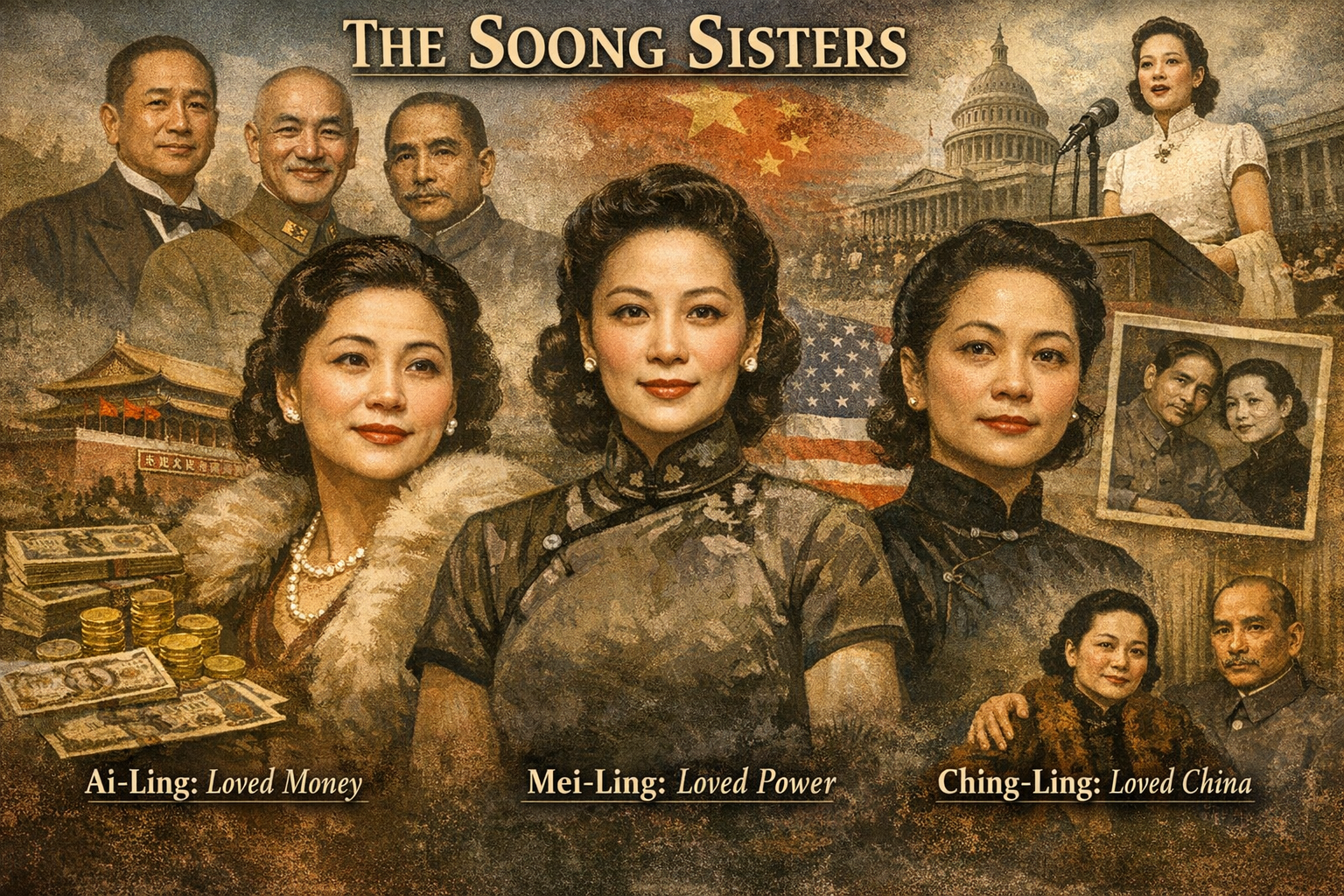
Few families in the history of China have exercised such wide-ranging influence as the Soong dynasty in the 20th century. The three famous Soong sisters married well. According to one saying, one loved money (Ai-Ling), one loved power (Mei-Ling), and one loved China (Ching-ling).
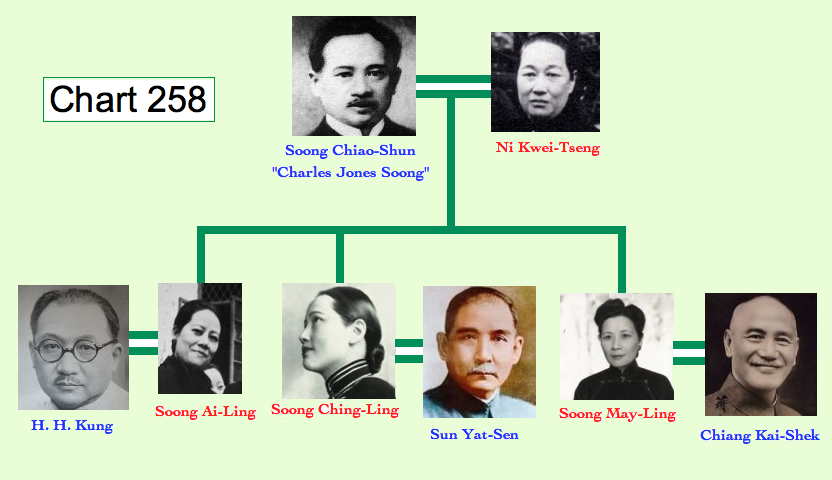
The eldest daughter, Soong Ai-Ling married H. H. Kung, reportedly an influential banker and possibly the richest man in China. Kung was a graduate of Oberlin College and Yale University. Ai-Ling was a graduate of Wesleyan College. Ai-Ling negotiated her sister Mei-ling's marriage to Chiang Kai-shek (insisting he convert to Christianity before he would be allowed to marry her sister). H. H. Kung became Chiang's financier. Brother T.V. Soong would engage with financial interests in China and would later serve as Chiang's ambassador to Washington, D.C. Ai-Ling was the glue that held these relationships together.
Ching-Ling was married to Sun Yat-sen, the founder of the Chinese Republic. This gave her a significant status within post-imperial China and alone among the sisters, she remained in China after the Communist takeover in 1949.
Mei-Ling married Chiang Kai-shek. Her marriage to the head of the Nationalist Party was probably more advantageous for Chiang than it was for Mei-Ling. During her husband's years as the perceived head of China, she fulfilled a number of functions to include first lady and minister of the air force. She was one of the most admired and glamorous women in the world during World War II, despite having a reputation for deceit and ruthlessness. She was probably the only person who Chiang Kai-shek completely trusted. During World War II she was allowed to address a joint session of congress.
A chart depicting the Soong sisters and their marriages is available here.
Upcoming Episodes!