
Episodes
3
Sept. 15, 2026
403: Internal Improvements - Enter Lincoln
For obvious reasons, Abraham Lincoln's presidency is best remembered for his emancipation of America's slaves, determination to preserve the Union in the face of Southern secession, and leadership in the American Civil War. But an often-overlooked aspect of his administration was its promotion of the United States Government as an active, positive actor in such matters as infrastructure improvement and economic affairs. In this conclusion to the series, Marshall leads our discussion of how the f...
2
Sept. 1, 2026
402: Internal Improvements - By The Eternal!
President Andrew Jackson took office in 1829. beginning a 30-year period in which his Democratic Party blocked the efforts of the 'elitist" Whig Party to give the U.S. federal government a greater role in developing the country's infrastructure and stabilizing its financial system. Although the existence of slavery in the South did not divide the two political parties at the time, its possible expansion into the western territories did, leading to increasing sectional hostility between North and...
1
Aug. 18, 2026
401: Internal Improvements - The American System
In the 1820s, Henry Clay envisioned a bold new role for the federal government: building America’s infrastructure, strengthening its economy, and shaping the nation’s future. He called it the 'American System.' But was the Constitution willing to let Washington build? In this premier episode of our new series, Marshall traces the battle over “Internal Improvements” from Clay and John Quincy Adams to Andrew Jackson and the rise of populist democracy. What began as a fight over roads, canals, and...
306
Aug. 4, 2026
306: A Christian Nation? - Facts and Fiction
The debate over whether America was founded as a Christian nation has endured for more than two centuries, but what does the historical record actually say? In the final installment of this series, Blake, Marshall, and Mike revisit the evidence, challenge some of the most persistent myths surrounding the American Founding, and examine what the Founders believed about Christianity, government, and religious freedom. Drawing together the evidence from across the series, they separate fact from fiction and ask what the Founding generation actually intended when it came to religion, government, and the identity of the United States. Is America a Christian nation? The answer is more complicated and more fascinating than either side of the debate often admits.
305
July 21, 2026
305: A Christian Nation? - The Awakenings
History remembers the Founding Fathers. It often forgets the revivalists. Between the Revolution and the modern era, a series of religious awakenings swept across America, changing not only how people worshiped, but how they understood the nation itself. In this conversation, Blake guides Marshall and Mike through the Great Awakenings, tracing the origins of evangelicalism, fundamentalism, and ideas that many now assume have always been part of American Christianity. If today's religious l...
304
July 7, 2026
304: A Christian Nation? - The Founders, Part 2
What were the personal religious beliefs of Thomas Paine, Patrick Henry, George Mason, James Madison, and Alexander Hamilton, and what role did they see for religion in the United States? Why did Mason and Madison disagree on the "toleration" of religious beliefs? These questions (and others) arise as Blake leads the second part of our discussion of what selected Founding Fathers held as their religious beliefs, what they thought about the role of religion in personal morality and civic society,...
303
June 24, 2026
303: A Christian Nation? - The Founders, Part 1
What were the personal religious beliefs of Benjamin Franklin, George Washington, Thomas Jefferson, Samuel Adams, and John Adams, and what role did they see for religion in the United States? Blake leads a discussion of what selected Founding Fathers held as their religious beliefs, what they thought about the role of religion in personal morality and civic society, how they sought to achieve civic tranquility through religious freedom, and how that played in role in forging the disunited coloni...
302
June 9, 2026
302: A Christian Nation? - The Colonies
Is the United States of America truly a Christian nation? Was it founded to be so? History has the answer! Blake, Marshall, and Mike break down the origins of each of the 13 original American colonies. We ask and answer the big questions: why they were founded, who contributed to the development, and, most importantly for this series, the religious affiliations (and lack thereof) carried by settlers and pilgrims, and the weight of the different churches in the New World.
301
May 26, 2026
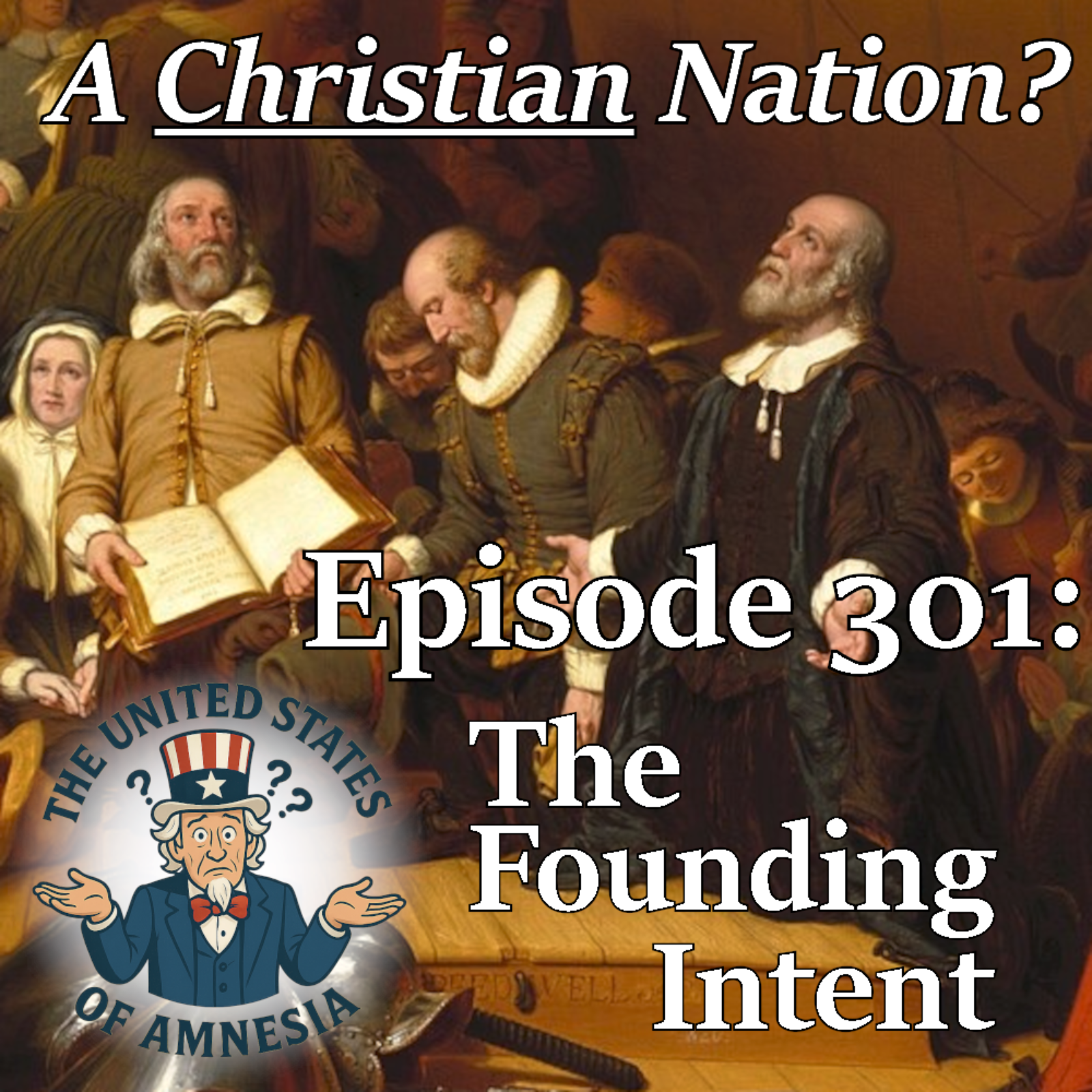
301: A Christian Nation? - The Founding Intent
Was America founded as a Christian nation? Some say yes, some say no, and the real answer is more complex than you might think. Blake takes the reins as the leader of this series, discussing the role (or in some cases, perhaps, the lack thereof) of Christianity in the establishment of the colonies, the founding of the nation, and the early evolution of the United States. In this premiere episode, Blake, Marshall, and Mike start with the First Amendment to the United States Constitution, and from...
211
May 12, 2026
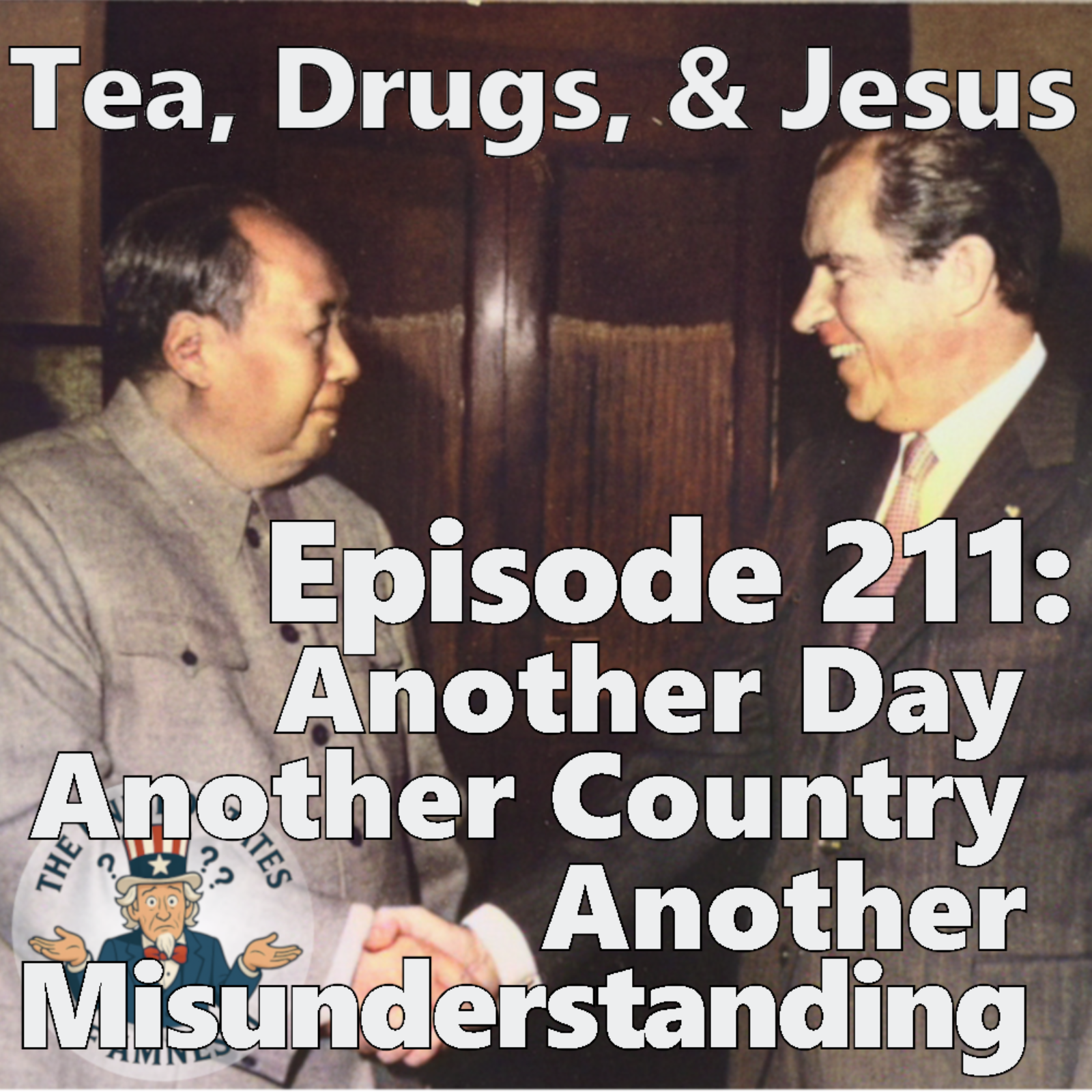
211: Tea, Drugs, and Jesus - Another Day, Another Country, Another Misunderstanding
Marshall, Blake, and Mike wrap up the "Tea, Drugs, and Jesus" series with a review of how the United States misunderstood China in various ways at various times during the history of relations between the two countries between the late 18th century and 1972, as well as what broader themes of misunderstanding recurred throughout that history. They then discuss how the United States continues to misunderstand China today, and how it similarly misjudges the motivations, behaviors, and actions of ma...
210
April 28, 2026
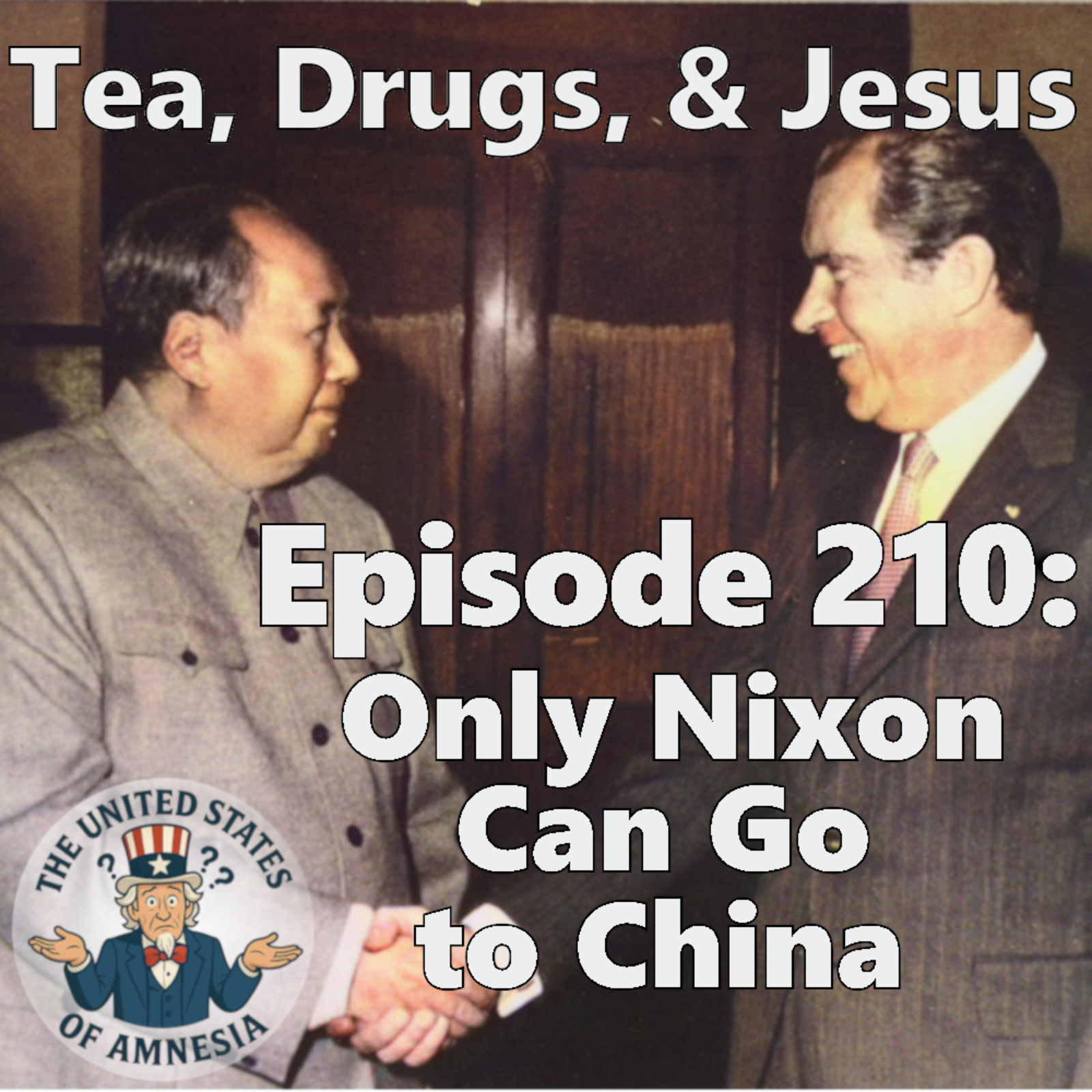
210: Tea, Drugs, and Jesus - Only Nixon Can Go to China
When Chinese "volunteers" intervened in the Korean War in 1950, American relations with the People's Republic of China fell into an icy abyss from which they did not emerge until President Richard Nixon made his momentous decision to transform world politics by visiting Beijing in 1972. In the United States, the "loss" of China to what Americans thought of as monolithic "world communism" led during the intervening two decades to the "Red Scare," the "Lavender Scare," blacklisting, and growing U....
209
April 15, 2026
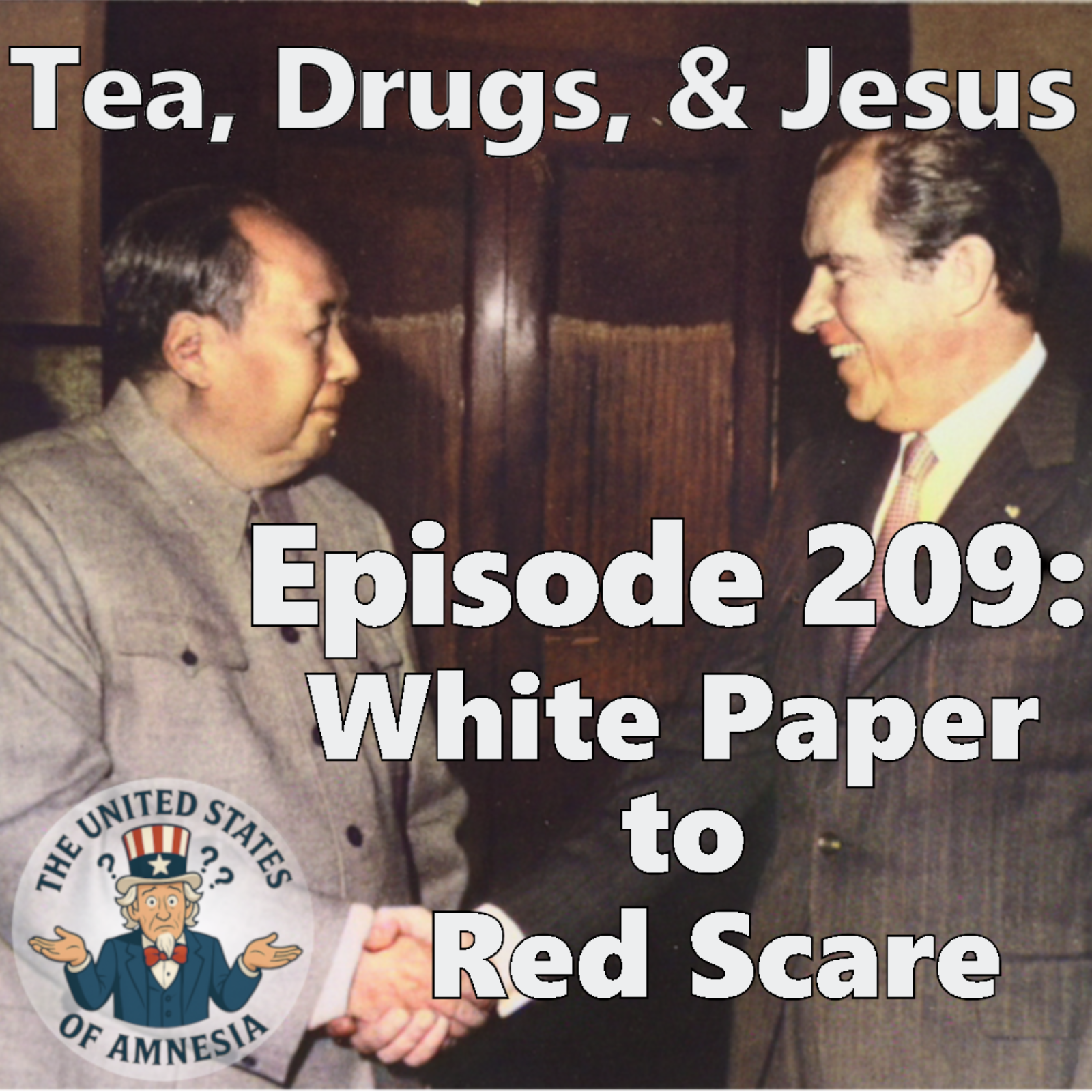
209: Tea, Drugs, and Jesus - White Paper to Red Scare
Marshall, Blake, and Mike engage in a wide-ranging discussion of American policy disputes over what to do about China after World War II. President Truman, Secretaries of State George C. Marshall and Dean Acheson, Madame Chiang and her family, General Claire Chennault, Joseph Stalin, Mao Zedong, the CIA, the domino theory, the American idea of monolithic “international communism,” and anti-colonial nationalist movements in Southeast Asia all play roles as Marshall lays out three options U.S. pol...