Internal Improvements: A Look Back
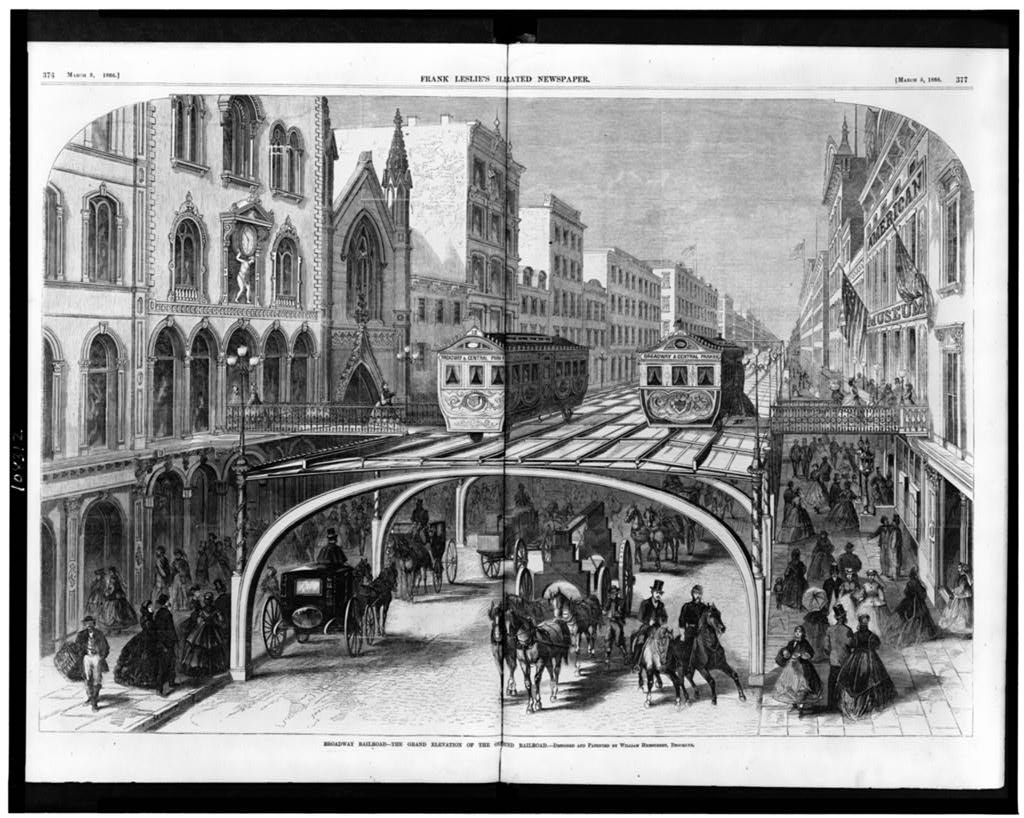
When John Quincy Adams and Henry Clay talked about “Internal Improvements” and the “American System” in the 1820s, they were imagining an America that did not really exist yet, and was very difficult for most to conceptualize. The country had enormous territory and resources, but getting commodities from the 'Wild' West to eastern markets could mean hauling them over terrible roads or sending them down rivers. 'Wild' really meant wild. Adams and Clay believed the federal government could help unlock that potential through roads, canals, a national bank, tariffs, education, scientific research, and other investments. To Americans today, much of that sounds fairly ordinary. At the time, it was a controversial vision of what the federal government should be allowed to do.
The debate that followed was never really just about roads and canals. It absolutely was, but only because it was a pressing concern at the time. It was really about how much power the federal government could and should have over the everyday economic life of Americans, and where that power should end. That argument has never gone away. Republicans and Democrats still fight over whether D.C. should play an active role in solving the problems of ordinary Americans, or whether more responsibility should remain with states, communities, individuals, and the private sector. The difference is that the scale of the modern economy has made the consequences much larger.
And there is another side to the argument that is easy to overlook when “limited government” becomes an end in itself. Markets depend on incentives, and corporations have incentives too. If a company can cut wages, deny a claim, weaken workplace protections, consolidate a market, or otherwise shift costs onto ordinary people without meaningful consequences, there is no particular reason to assume that company will simply choose to do the right thing.
The continuing public concern over health insurance claim denials is one example. A study done in Sept. 2026 by KFF, Health Care Access and Affordability for Adults with Multiple or Complex Health Conditions: A Snapshot of Patient Experiences, found that 66% of insured adults viewed delays and denials by health insurers as a major problem, while 33% reported having a claim denied in the previous two years. The question here, then, is not simply whether government is too big. It is also whether government is strong enough and incentivized enough to keep concentrated private power from becoming its own kind of government. And, it forces us to confront human nature and greed; a functioning, long-lasting civilization is not built on greed, and without incentive for altruism or social investment, powerful people will often serve themselves first if it fattens their wallet.
That, to me, is one of the more interesting lessons of this history. The argument over Internal Improvements never really ended, it just changed its vocabulary. A government powerful enough to build a railroad, establish a university, or provide a safety net is also powerful enough to spend enormous sums, create layers of bureaucracy, and reach further into people's lives than they believe it should. But the opposite extreme has its own problem. A government that places too much faith in the idea that markets and powerful private interests will regulate themselves can leave ordinary people with very little leverage when those interests become concentrated enough to ignore them. We are still living inside that pendulum swing.
I believe the common question being asked, whether government should act or stay out of the way, is incorrect. It's too simple, there's far more nuance today than ever before. The correct question is where can a government can create genuine national value? Where does it need to restrain concentrated power, and where do its intervention begin to create problems of its own? That tension was at the heart of the American System in the 1820s, and is still very much alive today.
The difference is we can look back in time to Adams and Clay and see the results: a unified nation spanning coast to coast with navigable roads, waterways, and a growing rail network that facilitated an exploding population and blossoming economy. This would NOT have been possible, the United States as we know it today would not exist to nearly the same degree or scale, had the conservative politicians had their way. Time and time again, conservative politics have commonly been deemed as being on the wrong side of history, and history proves that to this day.
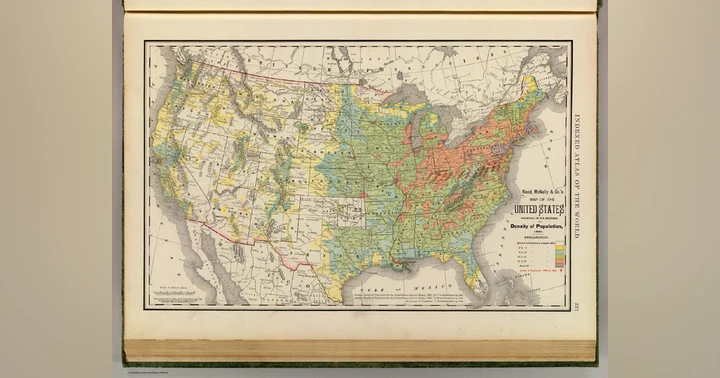
Population Expansion Under Internal Improvements